In Tuban, the wax is warm before the rice is.
Ibu Srikanthi lights the small stove at the back of the house, sets the pot of wax on it, and waits for it to turn from pale amber to clear. The smell arrives first: honey from the beeswax, something smoky from the pine resin. Then she pulls a low wooden stool up to the gawangan, the bamboo frame where the cloth hangs like a curtain, and picks up a pencil.
She sketches the first flower so lightly you have to tilt the cotton toward the window to see it. This cloth will take her about thirty days. This is the process behind Flora, our eternal garden of flowers growing in our regenerative Tumpang Sari farms.

A State of Flow
When was the last time you did one thing and gave it all your attention? Most days ask for our attention in pieces. A message while the kettle boils. A tab left open for a week. A book with a receipt marking page forty, since March.
Somewhere in the middle of all that, many of us carry a small longing we rarely say out loud. To make something slowly. To finish it. To look at a thing and know it holds a month of our life.
The psychologist Mihaly Csikszentmihalyi spent his career studying moments like this. He called it flow: the state where a task is difficult enough to hold your full attention and familiar enough that your hands know the way. The noise in your head goes quiet. An afternoon passes like a few minutes.
People who reach it describe it as some of the happiest time of their lives. It's something I feel whenever I see the Ibus working side by side at Rumah SukkhaCitta Tuban, deep in a state of flow where their hands are working in harmony with their mind and heart, as hot wax poured line by line from their copper tjanting pen.

What is Batik Tulis?
Batik Tulis is a heritage resist dye technique that is drawn entirely by hand. The artisan uses a canting, a small copper pen with a wooden handle, to draw lines of hot wax onto cloth. The wax resists the dye. When the cloth is dyed and the wax is boiled away, the drawn lines remain.

Tulis means "to write." In Java, you don't make batik tulis. You write it.
One old telling says the word batik comes from amba, to write, and titik, a dot. Whether or not the etymology is exact, it describes the work perfectly: a whole language built one dot at a time.
And it really is a language. For centuries in Java, what you wore said something about who you were and what you hoped for.
Some motifs were reserved for royalty; certain parang patterns, the diagonal rows that look like waves breaking on rock, could only be worn inside the palace walls. Others belonged to particular moments. A bride might wear sido mukti, a wish for a life of dignity and plenty. A motif becomes a prayer, felt deeply from the maker to the wearer.
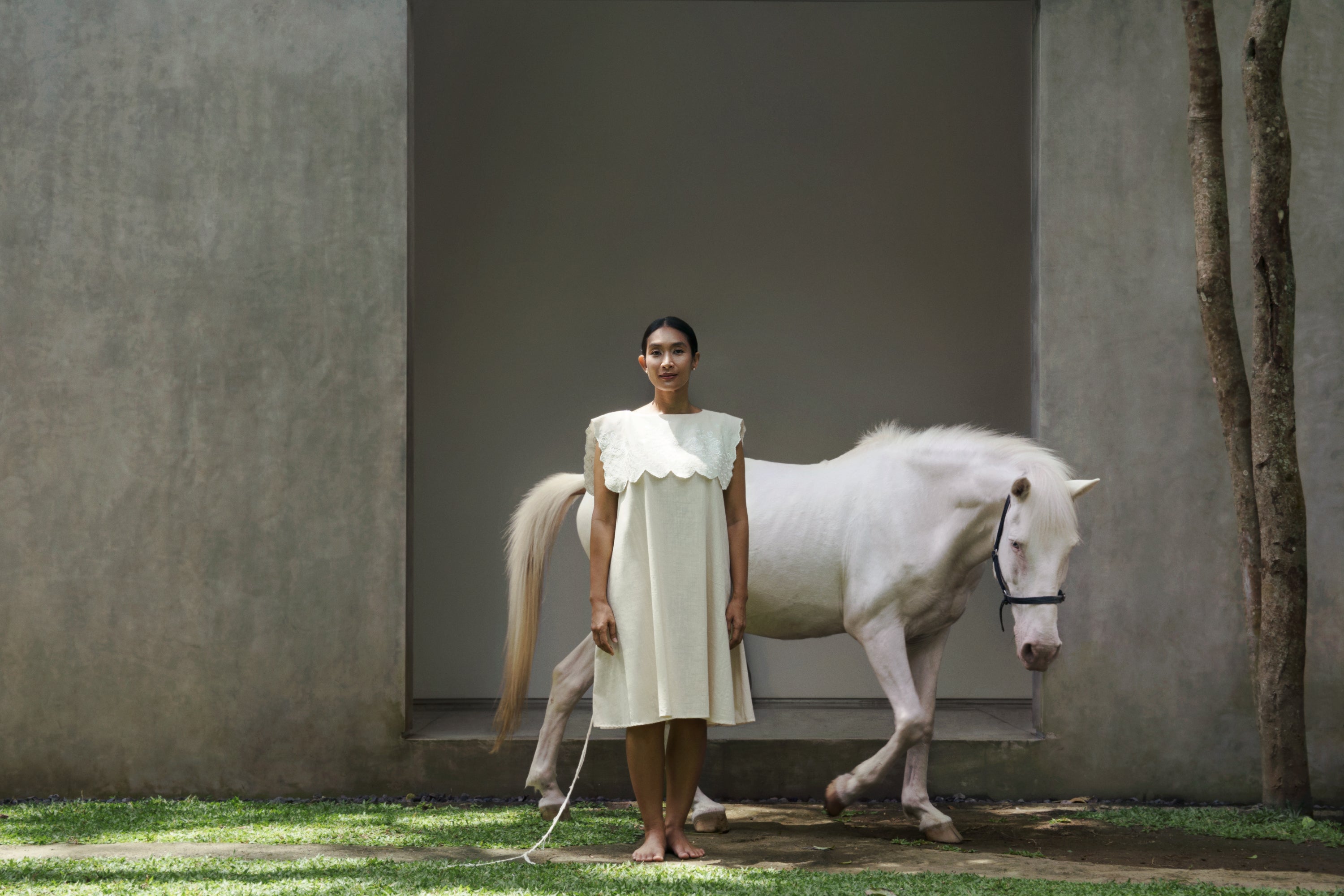
 I will never forget the special Flora Kain our Ibus made for our Mitoni (Javanese 7 months ceremony). Clothed in their prayers and blessings, it made me feel so joyful to know that Tara will be born into a community of such resilient women. One day, I will pass this gift to her.

In Java, Batik is there from the first day to the last. A newborn is carried against her mother's chest in a batik sling. A girl learns to walk holding the edge of a kain. A couple is married in it, and the families who raised them stand beside them in it.
Grandmothers keep their best kain folded in a cupboard, and one day it becomes their granddaughter's. The colour will have softened. The cloth will have learned the shape of two bodies.
So when an Ibu draws a flower, she is working inside a very old conversation. Every petal of Flora is a Universe, inviting you to slow down and find yourself in the eternal garden. Where we can sit in the moment and watch them bloom, moment by moment.

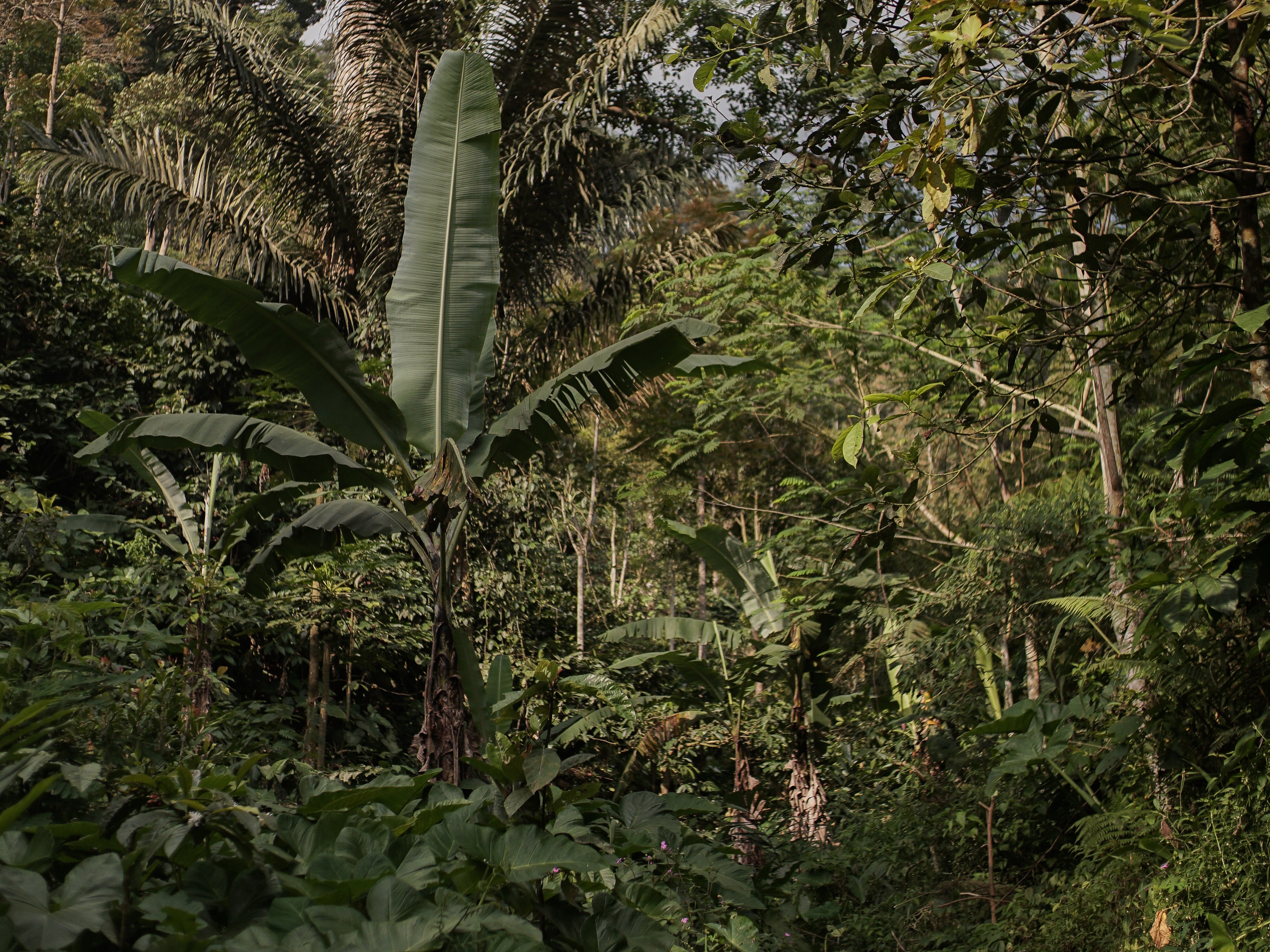
The flowers of Flora is inspired by what's growing in our regenerative Tumpang Sari farms that our Ibus plant, tend, and harvest. Growing not just flowers, but entire ecosystems. From farm to closet, every thread carries the pulse of the land.
Thirty days in the making
The process of creating a Flora piece is time intensive, as everything is made by hand and cannot be rushed. First, our Ibus trace every pencil line in wax with her finest canting. This first pass is called nglowong. A single flower might hold fifty tiny strokes.
Then, she turns the cloth over and traces every line again on the back, so the flowers are as clear inside the garment as outside. Almost no one will ever see this side. She does it anyway.
Next comes isen-isen: the dots, the veins in a leaf, the tiny repeated marks that make a petal look soft instead of flat. This is often the slowest part, and the part where an artisan's hand is most recognisable.
To create the golden flowers of Flora, every area meant to keep its colour is blocked with wax. Our Ibus use watercolor brush to spread the Terminalia Belirica fruits dye, before covering them again in hot wax to protect them from the subsequent dye bath.

Only after all these preparatory steps are done, the Ibus go into coloring the fabric with plants. With natural dye, one dip is never enough. The cloth is dipped, dried, dipped again, sometimes dozens of times, as the colour slowly deepens.
Finally, the cloth is boiled. The wax lifts away and floats to the surface, and for the first time after a full month’s work, the flowers appear in full. It is a moment where we witness the magic of creation take place, of seeing a full month’s work in its full form. We often do this while holding our breath, in awe of what would be revealed!

The colour that grew this season, literally
The colours of SukkhaCitta came from what was growing on our Tumpang Sari farms this season, where different plants grow side by side, each making the others stronger.
The rainy season in the beginning of this year gave us an abundance of Terminallia Belirica fruits, and it gave us this yellow. This is what allowed us to finally dye our iconic SweetIndigo™ Forest Green, that is made first by dipping the fabric in Indigo blue before putting it in this Sacred Gold dye bath.

You’re not just wearing a dress. You’re wearing a season of rain, the hum of bees, and the care of women who see the Earth as kin.
Natural dye remembers the season it came from. The rain, the soil, the month the leaves or fruit were picked: all of it shows up in the shade. Next year will be different. This exact yellow, and this exact green, may never happen again. This unique balance of blue and yellow is what makes green our hardest color to make, making each Flora piece truly limited by Nature.
Caring for Batik Tulis
The beautiful thing about Batik Tulis is that it gets better the longer you live with it. Hand wash it in cool water with a gentle soap. Javanese families traditionally use lerak, a soap nut that foams softly and is kind to natural dye. Dry it in the shade, since strong sun fades plant colour over time.
Over the years, the Kain softens and the colour settles. Your cloth starts to carry your life too: the trips, the long dinners, the morning you wore it to something that mattered.

This Flora Kain has accompanied my journey for over 5 years now. And I love how versatile it is! Recently, I even turned my Flora Scarf (above, right, styled as a top) into a Kain for Tara (above, left) during her first Balinese ceremony. I styled the Kain with the Flora Kebaya and Kapas Belt, while Bertram wears his Angkasa Kain with the Kapas Structured Shirt.
From her hands to yours
We asked Ibu Srikanthi what she'd like to say to the woman who wears her flowers.
"Mugi-mugi menawi dipun agem, panjenengan saged bingah lan wantun. Tiyang ingkang bingah, saged ndamel tiyang sanes ugi bingah."
When you wear this, I hope you feel happy and brave. A happy person makes other people happy too.
Whenever you wear a SukkhaCitta piece, you wear her prayer as your second skin. Accompanying your journey to follow your joy, wherever it may take you. You’re not just wearing a dress. You’re wearing a season of rain, the hum of bees, and the care of women who see the Earth as kin.
Discover Ibu Srikanthi's flowers, welcome to your eternal garden.